On Scale...(2.4.26)
On Scale...(2.4.26)
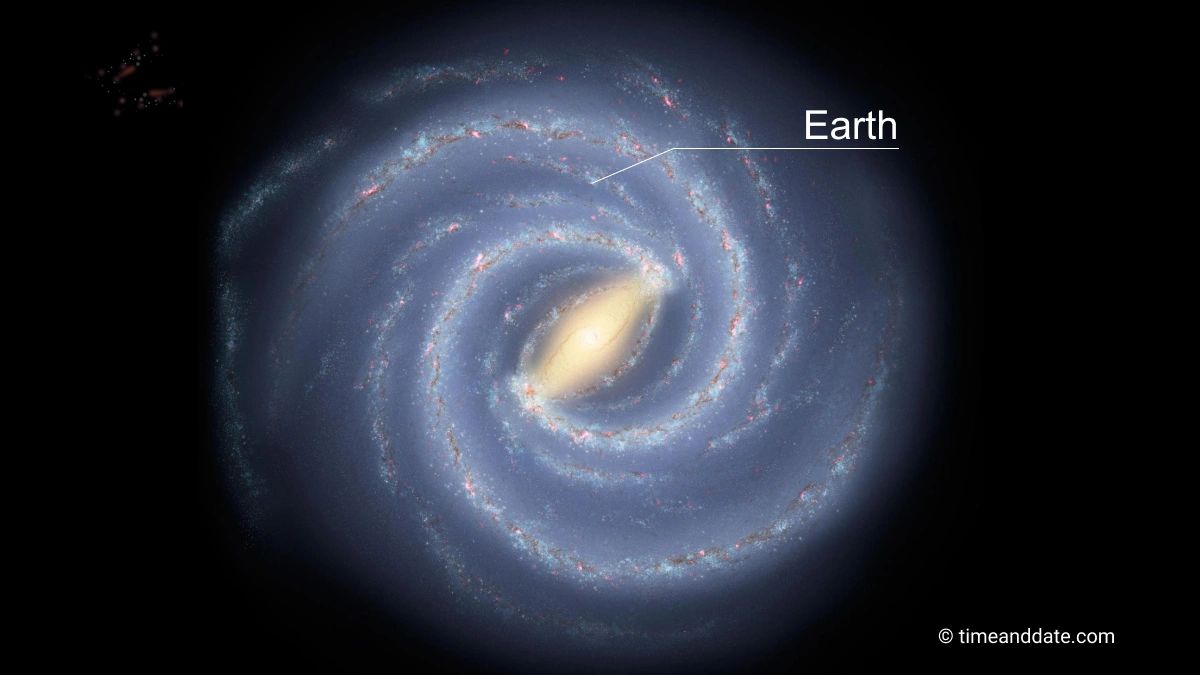
As a kid the books that interested me the most were always "short history of everything" style almanacs. The sort that were crammed with factoids that made me think "wow!". To be honest, it didn't matter if these were about dinosaurs, medical things (one favourite was a big flowchart book called "Family Health" outlining all manner of ailments), physics-lite, aliens, or astronomy. Anything that made the young me marvel at the great unknown and, I think, bump me into a new and thrilling perspective.
Later on, I really valued Bill Bryson's A Short History of Nearly Everything and a similar book by Geoffrey Blainey, tracking the arc of humanity. Later still, the brilliant Sapiens by Harari, which I'm currently reading for the third time at least. If I could pick a book to write, it would probably be that one.
However, sadly for you dear reader, I am more like the bumbling Bryson on these things, and make no claim of any expertise. Just a whopping fascination with some of this stuff, and, like Bryson, a strong sense these topics are taught appallingly in schools (or not taught at all), almost deliberately designed to turn people off understanding the sciences or the story of planet Earth. It's like a curriculum designed to avoid teaching anything interesting or useful if at all possible, and running completely away from teaching anything downright fascinating.
I'm not sure why, but I'm now returning to a lot of this in my own reading. I think this stems from a bit of desire for comfort food for my mind after some hefty output since December, and also from one or two fascinating conversations in the therapy room.
Anyway. This post is really about scale. About what the universe looks like when you look at it properly. About where we fit, how recently we arrived, whether anyone else is out there, and why the answers to those questions are stranger and more interesting than most people realise.
I've found that pulling this together does something useful to the mind: it loosens the grip of immediate worries, and it makes the "personal frame" we ordinarily think inside feel a little less like a hard limit. That alone makes it worth sharing here.
So here it is.
Nine Billion Years of Nothing
The observable universe is approximately 13.8 billion years old, and it contains somewhere in the region of two trillion galaxies. Each of those galaxies is home to between a hundred billion and four hundred billion stars. Most of those stars host planetary systems. This is a mind boggling number of planets. The numbers are measured, refined across decades of observation, and broadly agreed upon.
They are also, in any meaningful sense, incomprehensible. Just completely beyond the reach of intuition. You can write "two trillion galaxies" and your eyes will pass over it as though it were a bus timetable. But stop and try to hold it in your mind. Two trillion. That is 2,000 billion individual galaxies, each one containing hundreds of billions of stars. Each star potentially hosting worlds. The sheer quantity of stuff out there is so far beyond anything our minds evolved to process that the sentence might as well be a set of marks from an alien language.
Here is one way to try. Line up two trillion cars nose to tail, each represents a galaxy with hundreds of billions of stars, and trillions of planets, and the line would pass the orbit of Neptune, then Pluto, and still have nearly half the line left. The number becomes something else entirely: a length so vast that even the scale of our own solar system struggles to contain it.
And our solar system is not small. If the Sun were a football, about 30 centimetres across, the Earth would be a peppercorn around 32 metres away. You could stand next to the football and barely see it. Pluto, on the same scale, would be smaller than a pinhead, sitting over a mile away. That is just our solar system, one star's worth of space. The nearest neighbouring star, on this scale, would be another football around 7,000 miles away, more than the distance between London and Tokyo. And there are hundreds of billions of stars in our galaxy alone.
In fact, there are more stars in the observable universe than grains of sand on every beach and every desert on Earth. By some estimates, the ratio is about ten to one. For every single grain of sand on the entire planet, there are ten stars. I remember first encountering that comparison and genuinely not believing it. But the maths checks out.
For the first nine billion years of this universe, most of the time since the big bang, nothing on Earth existed, because Earth did not exist. There were no oceans, no continents, no atmosphere. No organisms, no species, no ecosystems. There was hydrogen, collapsing under gravity into the first stars. Those stars burned through their fuel and died, and in dying they forged heavier elements, carbon, oxygen, iron, and scattered them across space. The debris gathered into new stars, new planets, new configurations of matter. Most of it went nowhere in particular. Some of it, eventually, became a small rocky planet orbiting an unremarkable star in an unremarkable arm of an unremarkable galaxy.
And for most of the time since the Earth formed, it would remain unrecognisable to anything we might call an observer.
To help grasp just how late we arrive, let's compress the entire history of the universe onto a single calendar year. With the Big Bang at midnight on January 1st, the Earth would not form until early September. The first multicellular life would appear in mid-December. Dinosaurs would appear on Christmas Day and be gone by the 30th.
Anatomically modern humans pop up 300,000 years ago, at about 23:48 on December 31st.
The entirety of recorded civilisation, every empire, every language, every war, every piece of music, every scientific discovery, would occupy the final eleven seconds before midnight.
I find this genuinely staggering every time I encounter it.
But to trace what the universe actually produces, at least in one instance, we need to follow a single thread. This is the one we can follow, because it is ours.
A Small Rocky Planet
Only after most of the universe's story had already unfolded did a small, rocky planet form around an ordinary star.
Earth is approximately 4.5 billion years old. By the time it appeared, the universe was already two-thirds of its current age. The Sun around which it orbits is one of hundreds of billions of stars in the Milky Way alone. On any reasonable accounting, this is an extraordinarily minor location.
But the conditions here turned out to be unusually favourable: a stable orbit, liquid water, a magnetic field that shielded the surface from solar radiation, a large moon that stabilised axial tilt. These features are not unique in principle, but their combination, sustained over billions of years, appears to be uncommon.
Earth is not central to the cosmos in any physical or spatial sense. It is a local platform with unusual stability. That stability is what made everything that followed possible.
Three Billion Years of Microbes
For most of Earth's history, nothing you would recognise as life existed. And for most of the time life did exist, nothing you would recognise as an organism existed either.
The first living systems appeared around 3.5 to 4 billion years ago, so quite quickly after formation. For the next three billion years, life on Earth consisted almost entirely of single-celled organisms. No plants, no animals, no fungi, no visible structures of any kind. Just microbes. For eighty to ninety per cent of Earth's biological history, that was it.
And yet those microbes were, in a profound sense, the architects of the planet as we know it. Cyanobacteria produced the oxygen that transformed Earth's atmosphere during the Great Oxygenation Event, approximately 2.4 billion years ago. Without that transformation, no complex life would have been possible. The world we inhabit, with its breathable air and its ozone layer and its capacity to sustain large organisms, is a microbial construction.
The Earth is, and has always been, a microbial world. Everything else, every fern and fish and dinosaur and human being, is a late and fragile layer built on top of it.
When Life Got Interesting
Only in the final fraction of Earth's history did life become visible to the naked eye.
Multicellular organisms emerged roughly 600 million years ago. The Cambrian explosion, around 540 million years ago, produced a sudden and extraordinary diversification of body forms. In geological terms, it was rapid. In human terms, it unfolded over tens of millions of years. Either way, it represents the moment when life became complex, varied, and architecturally inventive on a scale that nothing before it had approached.
We then have a really long, uneven history of diversification punctuated by catastrophe. The Permian extinction, beginning around 252 million years ago, eliminated approximately ninety per cent of marine species. Life recovered, diversified again, and eventually produced the dinosaurs, who dominated terrestrial ecosystems for 165 million years.
That number deserves a pause, as it's another whopping number that is easy to pass over. A hundred and sixty-five million years.That is a tenure so far beyond anything in human experience that comparison becomes meaningless. And yet it ended, in effectively a geological instant, when an asteroid struck what is now the Yucatan Peninsula. The non-avian dinosaurs, and much else besides, were gone.
The lessons we see time and again - dominance on Earth is temporary, and even a huge duration does not confer permanence. A hundred and sixty-five million years of ecological supremacy offers no protection against the kind of disruption this planet periodically delivers.
In the aftermath, small mammals that had been living in the margins for millions of years found themselves in a world suddenly emptied of its dominant occupants. Over the next sixty-six million years, they diversified, grew, specialised, and eventually produced a lineage of upright primates in East Africa. Us.
The Last Two Seconds
Humans appear in the final seconds of the story...
Homo sapiens has existed for roughly 300,000 years. Agriculture, the foundation of settled civilisation, is 10,000 years old. The Scientific Revolution is about 400 years old. The Industrial Revolution around 250. The internet, about 20 years in any widespread sense.
On a 24-hour clock representing the age of the Earth, the entire existence of Homo sapiens occupies about the last two seconds. Agriculture appears in the final fraction of a second. Everything we think of as "history," the Pyramids, the Roman Empire, the printing press, the moon landing, all of it fits inside a sliver of time so thin it barely factors on any scale the planet would recognise.
Think of this. If you held both of your arms outstretched to represent the full age of the Earth, fingertip to fingertip, a single stroke of a nail file across your middle finger would erase the entirety of human history. Everything we have ever built, written, thought, or destroyed would disappear in one pass.
For most of our existence as a species, we were animals of no particular planetary consequence. We lived in small groups, made tools from stone and bone, tracked game, and navigated landscapes. We were clever, social, and adaptable, but we were not a force. Nothing about us, for most of our tenure, would have appeared remarkable to an external observer surveying the planet's systems.
In the final moments, something changed. Language, abstraction, social coordination, tool refinement, each capacity building on the ones before, until a species that had spent most of its history as a minor ecological presence became capable of reshaping the conditions that produced it. Harari points to the significance of storytelling - the basis on which culture and community, and so planning and coordination, produced rapid control of environments.
The speed and scale of this are genuinely unusual in the history of this planet. A species that arrived in the last two seconds of a 24-hour Earth clock now dominates the planet's surface, has reshaped ecosystems on every continent, and has acquired the capacity to alter planetary systems that took billions of years to form. The imbalance between duration and impact is extreme. No species in Earth's history has achieved this ratio of influence to time-on-the-pitch. The dinosaurs shaped ecosystems over 165 million years. Cyanobacteria transformed the atmosphere over billions. Humans have done something comparable in a few centuries.
A brief species has acquired the ability to alter the system that produced it, faster than any prior occupant managed, and by far.
Which brings up a question that has gripped me since I was about six years old - and once you take the preceding seriously, becomes very difficult to avoid. If this has happened here, under these conditions, on this one rocky planet around this one yellow star, what reason is there to assume it has happened only once...?
So... Where Is Everyone?
If the universe is this large and this old, and if the conditions that produced intelligence on Earth are even remotely reproducible elsewhere, then where is everyone?
In 1950, over lunch at Los Alamos National Laboratory, the physicist Enrico Fermi asked exactly this question. Given the size and age of the universe, and the sheer number of stars and planets it contains, the emergence of intelligent life elsewhere should be, statistically, almost inevitable. And yet there is no evidence of it. No signals or discovered artefacts. No visitors.
"Where is everybody?"
The question is known as the Fermi paradox, and it remains one of the most interesting unsolved problems in science. There are actually quite a few answers to the question, but none of the standard answers are fully satisfying.
The Great Filter hypothesis proposes that somewhere between barren, lifeless worlds and interstellar civilisation lies a barrier so difficult to pass that almost nothing makes it through. If the filter is behind us - such as the "emergence of general intelligence capable of cumulative knowledge being vanishingly unlikely" -, we are extremely rare survivors. If it is ahead of us - such as "complex life tends to destroy itself in direct proportion to technological power" -, the outlook is less encouraging.
The Rare Earth hypothesis argues that while microbial life may be common, the specific conditions required for complex, intelligent life are so improbable that Earth may be functionally unique.
The Dark Forest model, popularised by the novelist Liu Cixin, suggests that civilisations do exist but remain deliberately hidden, treating the cosmos as a hostile environment in which detection means destruction. (If you haven't read the Three-Body Problem trilogy, by the way, you should. It's extraordinary.)
Each of these has its own logic and its own limitations, but they share an assumption that may be the source of the difficulty.
Most responses to the Fermi paradox assume, implicitly, that civilisations overlap in time and that sufficiently advanced ones expand indefinitely. The logic runs: if a civilisation arises and survives long enough, it will colonise outward, eventually becoming detectable across galactic distances. The absence of such detection therefore requires a dramatic explanation.
But what if civilisations simply don’t overlap?
Consider the following. Life and intelligence may occur more than once across the history of a galaxy. The conditions are demanding but perhaps not unique to Earth and may in fact be very common indeed. However, technological civilisations are temporary. A civilisation measured from the development of complex tools to its eventual decline or dramatic ending may persist for thousands or tens of thousands of years. On cosmological timescales, that is vanishingly brief. A civilisation lasting 50,000 years occupies 0.00036% of the age of the universe. Seeing the current state of the world, can anyone safely bet we won’t have blown it all to bits before reaching another 30, 40, or 50,000 years from now?
Meanwhile, interstellar expansion is profoundly difficult. The energy requirements for sending material across even modest interstellar distances are enormous.
And even if you imagine a civilisation advanced enough to approach the speed of light, the physics becomes very strange indeed…
In fact, forward time travel is already a solved problem, at least in principle. I remember as a child staring for hours at a table in Eric Von Däniken's Chariots of the Gods showing what happens to time at speeds near light. At 99.9% of the speed of light, for every year that passes on the ship, twenty-two pass on Earth. Spend ten years travelling at that speed, and you return to find two centuries have passed at home. Spend fifty years, and you come back to a world more than a thousand years older than the one you left.
Now apply that to the nearest star. Proxima Centauri is 4.24 light years away, the very closest of hundreds of billions of stars in our galaxy. At 90% of light speed, the crew would experience about two years of travel while five years passed on Earth. That's one star. To cross the full diameter of the Milky Way at 99.9% of light speed, the crew would age around 4,500 years. Earth would age 100,000.
If you think about it in practical terms, it's more than stark. Take a system that is still, in cosmic terms, extraordinarily close. Let us say something in the order of fifty light years away - so barely a fraction of our own galaxy, and certainly in our very local neighbourhood. If there were a stable, Earth-like world at that distance, it would already count as a miracle.
At 99% of the speed of light, the journey would take around fifty years as measured on Earth. For those on board, it would feel closer to seven. A return trip would mean roughly fourteen years passing for the travellers, but a full century passing at home.
Even under these extremely favourable assumptions - a very nearby system, near-light travel, and a destination capable of supporting life - every journey becomes a one-way departure from your own time. The people who saw you leave would not be the people who saw you return. Parents, children, nieces and nephews, grandchildren, wives and husbands - everyone you ever actually knew - would all be long gone. You would likely need to look up your great-grandchildren. The world itself would have moved on by an entire historical era.
And it would not only be the people. It would be the whole cultural fabric of your life.
Every song you ever heard in the background of a kitchen, every advert that played on the TV, every politician you've ever known, every scandal that filled the news for weeks, every actor, sportsman or superstar, every catchphrase, fashion, national mood - literally all of it would have become history. Not old, but actual history itself, much of which would not have survived any more than you are aware of the popular songs of the early 1900s. In exactly the same way that Stanley Baldwin as Prime Minister, Calvin Coolidge as President, the General Strike, silent cinema, Al Jolson and George Gershwin feel to us now - recognisable maybe, but only if you happen to be some kind of absolute aficionado or history buff. Available, yes... but no longer part of the living world. And that's how your own life would feel on your return. Everything you recall would likely be of little note.
And it would not stop with the people, music and politics. The language around you would literally have changed. Don't believe me? Go and read the letters that ordinary soldiers sent home from the Great War. They read like War and Peace compared to anything you would write today - the syntax, the vocabulary, the assumed level of literary furniture that ordinary working men carried in their heads is simply not modern English. That is one century. Your hometown will almost certainly have changed beyond recognition, and your childhood home will quite possibly be physically gone, demolished and long ago replaced with something else. The arguments that once divided everyone you knew will have been settled eighty years ago and likely entirely forgotten. The big issues of your day will feel as relevant as the Norfolk farm workers strike in the 1920s to us now. And moreover, there are no guarantees your country will have survived intact in any form you would recognise.
And this is only for one journey just up the road...
Now imagine, in an act of heroic administrative stupidity, you have signed a NASA contract for two such trips. Two refuelling runs, so two outward journeys and two returns. Two hundred years of Earth time gone.
You leave a world of smartphones, podcasts, streaming services, climate politics, ageing parents, children at school, the NHS, TikTok, Tesco meal deals, Premier League football, and whatever happens to be the big cultural arguments of your time. You would return to a world for which all of that is as distant as 1826 is to us.
In 1826 the British Prime Minister was Lord Liverpool (as I'm sure we all knew!). The American President was John Quincy Adams. Beethoven was still alive and would die the following year. Jane Austen had been dead less than a decade. The United States was only fifty years past the Declaration of Independence.
That is the distance two round trips would place between you and your own life. Not metaphorically, but literally, physically.
The world you left would not just be older in the way we usually think of it - it would be as completely gone as having a drink with Al Capone in a speakeasy in New York City, or brunch with Oscar Wilde, or enjoying a croissant with Napoleon on Elba.
But unlike Capone, Wilde and Napoleon, who have just about survived the cut of history and remain somewhat recognisable today, only a tiny handful of the figures who feel central to the world now will be remembered at all. Perhaps Elon Musk, as the founding father of moon bases or recreational close-orbit space travel. Perhaps Donald Trump, as the bizarre populist president who broke the 20th century post-war consensus. Likely only a handful of people you have ever heard of in your entire life will be represented in history classes. You will find yourself asking "anyone remember Keir Starmer?" and the average graduate professional in 2226 will look at you blankly and say "what's that?".
And when you do make it back, alongside the extreme social changes, it goes without saying that the work you trained for may no longer exist anyway. Technologies move on. Entire fields disappear or are absorbed into something else. The skills that defined your professional life may have been obsolete for decades or longer by the time you walk back into the building, if the building is still standing.
Ask yourself if this feels like a realistic career choice that will appeal to the engineers and flight crews en masse....
This is not an extreme scenario. It is what follows from even the most favourable assumptions about distance and speed. Interstellar travel, even to our nearest neighbours, is a problem of time. Which means that even the most “local” interstellar travel carries a cost that is not actually about distance, but dislocation. You are not just crossing space. You are stepping out of synchrony with the world that made you.
If the destination planet sits in a region of stronger gravitational pull, time runs differently there too, as the film Interstellar explored really well.
The practical consequences of all this for colonisation are severe. Supply lines, communication, coordination, all of it must somehow operate across frames of reference in which clocks no longer agree. A "short" resupply mission from the settlers' perspective might arrive to find that base camp has aged by a thousand years. The logistics of maintaining any kind of coherent expansion under these conditions are, to put it mildly, mind-bending. We have struggled, even recently, to keep petrol in the pumps.
Interstellar colonisation would likely consume the entire output of an intelligent world, sustained across timescales that dwarf anything we associate with organised effort, and even then the model of a unified galactic civilisation expanding outward may have no basis in physical reality. To even do this once would be an entire planetary effort, never mind to “create an empire” like Star Wars.
Now put these factors together. Suppose that within a given galaxy, a technological civilisation arises on average once every ten million years. Suppose further, generously, that each one persists for 50,000 years before declining, transforming, or ceasing to be detectable.
The probability of any two such civilisations overlapping in time is extremely small. Each one would exist in effective isolation. The galaxy may be teeming with life on cosmic time, but because the gaps between emergences are orders of magnitude larger than the durations of the civilisations themselves then, to first approximation, it is always empty for any civilisation that emerges.
If so, this distinction reframes everything: the difference between emptiness and non-overlap. A galaxy could host hundreds of civilisations across its history, and at any given moment almost all of them could already be gone. Their windows close long before the next one opens.
If this model is broadly correct, the universe takes on an archaeological character. The traces of past civilisations, if they exist, would not take the form of active signals or incoming fleets. They would be remnants: atmospheric signatures on distant planets suggesting industrial activity long since ceased, nuclear-style disasters, degraded structures in orbit around stars we have not yet closely observed, probes drifting without function through interstellar space. We are not yet equipped to detect most of these traces, and may not be for some time.
The absence of active signals says very little by itself about whether life has arisen elsewhere. It may say more about duration, detectability, and timing than about existence.
Imagine five intelligent beings existing simultaneously on planet Earth, each rooted to the spot, each separated from the others by thousands of miles of ocean, ice, and desert. Each has a megaphone, and this is the only tool they will ever have. They share a world, and none of them will ever know the others exist. Now extend that across time as well as space: most of them are not even alive in the same millennium. That is closer to the picture the time-separation model produces.
I find this model more compelling than the alternatives, partly because it requires fewer large assumptions. It does not resolve the paradox with certainty, and it may yet prove incomplete. But there may be no Great Filter. There may be no cosmic predators enforcing silence. The universe may simply be gigantic, old, and structured in a way that makes temporal overlap between civilisations extremely unlikely.
Does Life Have a Direction?
But this model rests on a further question, and it is one that biology has never fully settled. Does life tend toward complexity? Or is intelligence a singular accident that happened to occur here and need not have occurred at all?
If intelligence is a one-off, the time-separation model collapses. There would be no reason to expect civilisations arising repeatedly across deep time, and the silence of the cosmos would require a simpler explanation: we are alone, or near enough.
The most influential argument against directionality in evolution comes from the palaeontologist Stephen Jay Gould. His position, developed in Full House, is straightforward. Life begins near a minimum boundary of complexity. It cannot become simpler than the simplest viable organism. From that starting point, variation will naturally produce some lineages that move toward greater complexity, simply because there is nowhere to go but outward.
But the average/mean of complexity does not change much. Most life remains simple. Bacteria have dominated the Earth for the entirety of its biological history and continue to do so. The existence of complex organisms does not indicate a directional force. It indicates a random walk with a wall on one side.
While this is a serious argument, there is a counterpoint that comes from observation rather than philosophy.
The evolutionary biologist Simon Conway Morris has documented extensively what he calls “convergent evolution”: the repeated, independent emergence of similar solutions across unrelated lineages. Eyes have evolved independently dozens of times. Flight has arisen in insects, pterosaurs, birds, and bats. Echolocation appears in both cetaceans and bats. Warm-bloodedness evolved separately in mammals and birds.
These parallels suggest that the space of viable biological solutions is more constrained than a purely random model would predict. In other words, evolution does not wander without limit. It revisits certain configurations because those configurations work, given the physical and chemical constraints of the environments in which life operates.
The question is whether intelligence belongs on this list. Conway Morris argues that it does, pointing to the independent emergence of sophisticated cognitive abilities in primates, corvids, cephalopods, and cetaceans. Octopuses solve puzzles. Crows make tools. Dolphins recognise themselves in mirrors. These lineages are separated by hundreds of millions of years of evolutionary divergence, yet each has arrived at recognisably complex forms of problem-solving, social behaviour, and environmental manipulation.
This does not prove that intelligence is inevitable. But it suggests it is not singular either. It happens to be what I think too.
One way to hold both Gould and Conway Morris together, rather than choosing between them, is to think about what actually happens to biological complexity across deep time. Life begins near a minimum. The earliest viable organisms are simple. From that starting point, lineages diversify. Most remain simple. Some increase in complexity, others decrease. The average may not change that dramatically. On this point, Gould is correct.
But the interesting movement occurs at the outer edge... Over billions of years, the maximum degree of realised complexity has expanded. Yes, with catastrophic setbacks along the way. The Permian extinction devastated the biosphere. The end-Cretaceous event wiped out the dinosaurs. Each represents a sudden collapse in both diversity and maximum complexity.
But in every observed case, recovery has eventually pushed the frontier back out. The specific organisms that occupied the complexity frontier before an extinction are gone. New ones take their place, often from entirely different branches of the tree of life. The particular path is erased, but the broad tendency towards complexity persists.
There is no ladder here, and no destination. But the outer edge keeps pushing further out, even if the centre stays crowded with simple life.
Intelligence may not be the goal of evolution, but it seems to be a threshold that becomes increasingly accessible as the frontier of complexity expands.
If even nearly right, it connects back to the Fermi question. Life may be common. Intelligence may be rare. But if the process that generates complexity is directional, even weakly, then intelligence becomes a threshold that biological systems, given the right conditions and enough time, may cross again and again.
The silence of the cosmos then requires much less than uniqueness. It requires only that intelligence, wherever it arises, remains brief relative to the intervals between its emergences, and local relative to the distances that separate its instances. Recurrence plus time separation would produce exactly the observational picture we see.
The Minds We Think With
Ok. I have pushed this line of thinking about as far as cosmology and biology can take it. The final kind of constraint is an important one, and it is closer to home: the question of whether we can actually think clearly about any of this, given the minds we have.
Human perception developed to navigate distances measured in metres, durations measured in seasons, and social environments consisting of a few dozen to a few hundred individuals. When we think of our own past, what we were up to just 30 years ago takes on the sepia-toned hue of old cinema film. We are shackled to the extremely short term. These were the parameters necessary for survival, and our cognitive architecture reflects them exactly. Nothing in that architecture equips us to intuit a billion years. We can write the number and perform calculations with it. But we just don’t experience it in the way we experience an afternoon or a winter.
This is no failure of intelligence, just a constraint of human hardware design. Our perceptual frame was built for a local environment, and it works extraordinarily well there. The difficulties arise when we try to use it on a system operating at an entirely different order of magnitude.
We can learn about cosmological time, geological process, and planetary systems and all these things…
We cannot feel them.
And because we cannot feel them, we default to the frame we have. We treat our own moment as the centre of the story. We experience the concerns of our lifetime as the concerns of the species. We take the range of what is visible to us, personally, culturally, institutionally, as the full picture.
This is the ordinary operation of a cognitive system doing what it was designed to do: making the local environment intelligible. The frame works. And it must work, because without it we could not function at all. The difficulty is that we mistake it for the territory.
Across cosmology, biology, and human psychology, the same structure appears: systems operate within frames that feel complete from the inside.
And Here You Are, Reading About It
Consider what is happening when a human being contemplates the universe.
A species, produced by the same physical processes it is studying, has developed the capacity to model the system that generated it, with increasing precision and scope. Every atom heavier than hydrogen in your body was forged inside a star that died before the Sun existed. And here you are, reading about it.
That is, when you stop and think about it, astonishing.
It is tempting to conclude that none of it matters. The universe does not support that conclusion. But, let’s be honest, it does not relieve us of it either.
We are recent, working with minds built for tracking animals and reading faces, and yet here we are, measuring the age of stars and modelling the structure of galaxies.
That fact does not resolve anything. You can understand the structure of something completely and still be unable to do anything about it. The universe has, in us, produced minds capable of grasping how vast and old it is, how brief we are within it, and how little any of that understanding changes our situation. We can see the walls clearly now, but we are still inside the room...
The universe is vast and old beyond intuition. Human beings are very new, equipped with a perceptual system that was never built for this knowledge. That these two facts coexist is, on its own, remarkable enough.
For billions of years, the universe unfolded without us. What we do with the brief window in which it does not is, for now, an open question.
---
Steve Perkins is a Consultant Psychotherapist and Clinical Supervisor in private practice in Shoreham-by-Sea and City of London. He is the author of Moral Singularity: Life Inside Closed Moral Worlds and Why Moral Conversation Breaks Down (2026), and writes on therapeutic enclosure, conviction cascades, the interpretive ratchet, and the structural dynamics of closed moral systems.
MBACP (Accred)
www.whitestonetherapy.com


Thanks for sharing this helpful information! I’ve been researching ways to support lung health, and Respiclear looks like a promising solution. Including resources like Respiclear really adds value for anyone interested in improving their breathing naturally.
ReplyDeleteAwesome content! I’ve added Respiclear to my research list.
ReplyDeleteInteresting insights! I’ve heard good things about NeuroGenica recently.
ReplyDeleteThis is a helpful breakdown. I recently read about CitrusBurn and it looks like a natural option worth exploring.
ReplyDeleteThanks for sharing this valuable post. I recently discovered Metabo Drops and it looks promising for boosting metabolism naturally.
ReplyDeleteThanks for the detailed explanation. I’ve recently discovered Spartamax and it looks worth exploring.
ReplyDeleteGreat and informative post! I’ve been researching nerve health solutions lately and came across SciatiEase. It seems like an interesting natural option for sciatic support.
ReplyDelete