The hidden emotional life of the step-parent... (1.12.25)
The hidden emotional life of the step-parent... (1.12.25)
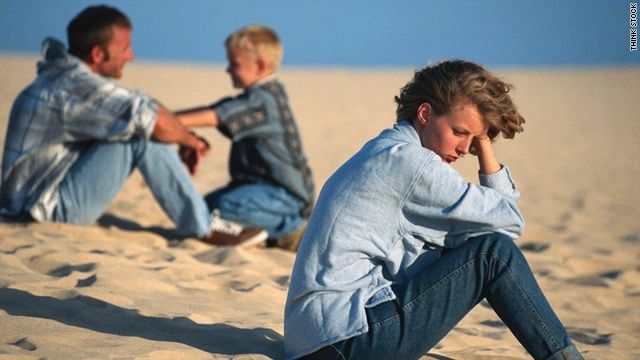
Changing tack for a while from the politics of therapy, I was reminded of this topic when a related email arrived in my inbox. The challenge of step-parenting comes up in therapy a lot, but almost everything written is either aimed at the children ("How to help your kids adjust") or at the couple (e.g. "communication tips"). I see little giving voice to the step-parent's inner experience. That is what interests me.
Did you know that one in ten families with dependent children in the UK is a stepfamily? That’s perhaps a million children - and close to that number of step-parents - navigating terrain that rarely gets talked about openly.
In therapy I often hear heart-warming stories of stepfamilies that work beautifully. But even in the best of them, something usually remains unspoken: the private emotional experience of the step-parent.
Adult step-children will quite readily talk about what it felt like to acquire a step-parent. They rarely, however, stop to imagine what it felt like to become one. Childhood memories are, by design, self-centred. We store them as “the story of me,” and the step-parent tends to appear in that story as a two-dimensional figure - sometimes welcome, sometimes not, but almost never seen in the round.
So when a former step-child becomes a step-parent themselves and walks into my office, the light-bulb moment is often palpable. I've seen it a few times. Suddenly they meet, in themselves, some of the background struggles they never noticed in the adults who raised them.
Our culture doesn’t help. We have days, weeks, even months of 'celebration' for almost everything - left-handers, doughnuts, even a "talk like a pirate" day - but virtually nothing that properly honours step-parents. Mother’s and Father’s Days notionally include them, yet everyone knows where the important cards and the visits actually go. There is a “Stepfamily Day” in September, but it isn’t officially recognised. In the national conversation, step-parenting remains oddly invisible.
And that invisibility matters, because the role itself is emotionally complicated in ways that are rarely acknowledged.
I’ve sat with many kind, committed step-parents - people who never signed up to feel resentful, isolated, or perpetually second-tier - who carry a hidden weight. Often their partner, the biological parent, genuinely doesn’t see the depth of what they’re asking or the cost of what is being given. Many step-parents soften or silence their feelings to protect their relationship, which leaves them regulating powerful emotions more or less alone.
Below are some of the 'hidden' themes that surface in therapy. I've heard variations of each many times over. They are composite, generalised themes; very few step-parents escape all of them entirely, and many will, at different times, recognise almost the whole list. But when several coincide, the emotional load can be surprisingly heavy - and is almost always accompanied by guilt for feeling it at all.
1. Chronic disempowerment
In your own home you are never quite “in charge.” Simple household rules, routines, or decisions that biological parents make instinctively become negotiable territory for you - or simply off-limits.
The step-child can veto your authority at any moment simply by ignoring you or addressing only their biological parent. Requests, plans, even casual conversations may be routed around you as though you hold no executive or social function in the family you help run, leaving you tip-toeing through your own life like a permanent guest.
You may lower your voice, walk on eggshells around moods that are not yours to manage (that you are not even welcome to be aware of) - to avoid being cast as the difficult step-parent.
Over the years this chronic self-censorship becomes a second, invisible full-time job. If you do raise issues, you're often handed a list of ways you could "try harder" to connect with the step child, and reminded you ought to be the "bigger person" as you are an adult - as though the problem is your failure to adapt rather than the structural imbalance itself.
2. Never quite anyone’s priority
Your partner’s children will (rightly) come first for them; you may quietly notice you come first for no-one. That realisation can sit in the body for years.
At birthdays, Christmas, Easter, or any milestones that truly matter, the child's emotional centre of gravity naturally swings entirely towards biological parents (both of them). The cards, the photos, the hugs, the stories that will be retold for decades all belong, by default, to someone else.
You are there, but remain a supporting character, in a scene the child experiences as "with mum" or "with dad".
This is a condition that we know is 'not good' for any human heart, yet it is the default experience for step-parents, sometimes for many years.
3. Living with your partner’s ex
Diaries, child-care arrangements, school runs, finance, pick-ups and drop-offs, a regular flow of text messages, and so on: another adult remains a permanent third presence in the relationship, often treated as an unavoidable fact of life rather than recognised as a significant emotional demand on the step-parent.
The children can also import their own, often strongly held but incomplete or inaccurate, version of adult events into the home - who was “to blame”, who “caused” the split, who is now “doing more” - turning complex, private adult history into public family currency that the step-parent must accept, even if factually wrong, incomplete, and painful.
At its most subtle, the ex can be invoked in glowing, idealised terms that can gently diminish the step-parent’s role and place extra pressure on your relationship.
Alongside a child-edited version of history is a child-edited version of daily reality - who paid for what, who was fair, who sacrificed, who should do things - a version you can never correct, contradict, or fully know, yet are expected to live inside without protest.
4. A two-tier affection system
Hugs, “I love yous,” and daily warmth may flow freely between biological parent and child, yet stop short at the step-parent. Over years this can calcify into a painful, unspoken apartheid.
5. Responsibility without recognition
You contribute time, money, emotional labour, opportunities - often generously - and watch most of the gratitude, and the main current of the family narrative, flow to the biological parent.
It can feel a life of non-reciprocal duty; of giving while remaining forever on a kind of conditional probation. A school trip you've helped fund becomes just “dad’s treat” or "mum's treat". The house you might have worked so hard for is called just “dad's house” or "mum's house".
In the eyes of the children (and sometimes the wider world), the material traces of your life's work are reassigned to someone else without anyone noticing. Over time you can even start to believe the edited version yourself, losing a sense of agency and power in your own life, until the things you've built no longer feel like yours.
You become an "anonymous donor" in someone else’s life story, rather than the author of your own. This is so important, but is hard to articulate, next to impossible to share without seeming monstrous, and so shame develops.
6. "The blind-spot response"
If you do speak up, the biological parent often hears only criticism of their child or their own parenting. The reflex answer is almost always some version of "you need to be the adult / try these five things to build a better relationship".
This turns a legitimate structural wound into a personal improvement project, and can crystallize a sense of hopelessness and resentment in step-parents.
Some step-parents have noted, with a smile, that their partner giving this advice would likely last about a week in the reverse role before running for the hills! (I find that easy to believe!).
7. The love equation feels unbalanced
Some step-parents discover, to their distress, that the deep, instinctive parental love they expected to feel (or the sense of love they hoped to receive) doesn’t always materialise in the same way. Admitting this - even to oneself - can trigger shame.
8. No reflection, or the wrong reflection
Biological parents see themselves echoed in their child’s face, mannerisms, achievements (mirroring). Step-parents often see either no reflection at all, or a daily reminder of their partner’s previous relationship.
Occasionally, a step-child may also be rejecting - subtly or openly - of the step-parent’s features, skills or interests, or even wider family, friends, or traditions, leaving the step-parent feeling that even their broader tribe has been placed off-limits.
This can create a painful, unspoken loyalty conflict: loving your partner while feeling on the outside of the family you help hold together.
This can leave you feeling on the outside of the family.
9. Discipline by proxy
Direct discipline is often off-limits (“You’re not my real dad/mum”). Issues must be raised privately with your partner, who then decides whether and how to act - leaving you in a permanently consultative role.
10. The unspoken double-bind
You love your partner deeply, and may even care deeply for your step-child - yet still find yourself, at times, with a powerful wish to be anywhere else when that child is present, or even by visceral revulsion. The conflict - loving one person while recoiling from another who is part of the same package - can feel horrendous to admit.
I have heard some step-parents describe this as a near-constant undercurrent, and others say it only surfaces in certain moments or with certain children. Either way, it's not proof you are a bad person. It's the predictable human response to years of giving in a relationship that may offer little emotional reciprocity in return. The shame that follows is the final twist of the knife.
11. The guilt–resentment–more guilt cycle
Feeling irritated, left out, or taken for granted is normal; feeling those things about children you have chosen to care for is experienced as proof you are a bad person. The shame keeps the feelings locked inside.
12. The biological parent’s blind spot
An assumption can settle in over time: “Of course you feel about my kids exactly the way I do.” When that turns out not to be true, there is often nowhere safe to say it.
13. The "intentional stance" of the step-child
One crucial variable is very often overlooked (especially by biological parents) - the step-child’s own growing agency. From early teens onward, step-children are increasingly capable of choosing openness or distance, courtesy or dismissal, inclusion or exclusion. Certainly, nobody else can make this choice.
Many do choose warmth and connection - and when they do, step-parenting can feel rich and mutual. But when that choice is withheld, or offered only on the child’s terms, the step-parent is left carrying a relationship that is structurally one-sided.
This can feel almost impossible to speak aloud - it can feel like blaming a child who is navigating loyalty binds and loss, or asking a guilty biological parent to "side against" their own child. Yet pretending the child has no agency is the very thing that leaves the step-parent bearing the entire emotional weight alone.
Recognising this is not about blame. It is simply acknowledging that good step-parenting, by adolescence, ultimately requires three willing participants, not two adults and one bystander.
----------------
[ Note: everything above assumes reasonably ordinary, non-abusive family circumstances. In situations of genuine trauma, high conflict, or serious behavioural/mental-health challenges, the emotional situation is very different.]
-----------------
These experiences are structural - they are baked into the geometry of step-parenting when everyone is trying their best. The child has no duty to fix any of it; they are simply being a child. That is precisely why the step-parent’s feelings are so hard to place: there is often no villain, only a situation. I've noticed that everything written above is hard to explain, even to close family members or friends, especially if they are not themselves step-parents. Sharing is sometimes experienced as an admission of failure.
Step-parents sometimes discover that even great partners (biological parents) struggle to truly see the cumulative weight these small, daily erasures carry - perhaps as it means admitting that the family structure itself asks something that is, maybe, fundamentally unfair of the step-parent. I think it's less about personal failings of any kind, and more about biological wiring. And perhaps good step-parenting has something to do with accepting that it is "fundamentally unfair" with grace. This, I suspect, would be easier to accept if it were acknowledged...
I've worked with step-parents who carry well over half this list for years with grace and generosity. I salute them. I have also worked with people who, after honest reflection, decided the role is simply too emotionally costly. I will be honest, dear reader: I don't think the role is for everyone... That decision can be anguished, but it is also valid if the situation is just no good for all concerned.
If you are a step-parent reading this and some of it rings painfully true: you are not ungrateful, selfish, or inadequate. It's one of the very hardest jobs to get right, and absolutely impossible to get perfect. You are human, responding to a set of emotional demands that society does a great job of keeping in the shadows. Hang in there!
And if you are an adult who once had a step-parent who was pretty decent - maybe one who stuck around, paid the bills, drove you to matches, and never made too much of a fuss - give some thought to sending them a message. Not out of obligation or sentimentality, but out of simple recognition; - you may make more than "their day"....
A great many of them never heard it while they were doing the hardest parts.
---
Steve Perkins is a Consultant Psychotherapist and Clinical Supervisor in private practice in Shoreham-by-Sea and City of London. He is the author of Moral Singularity: Life Inside Closed Moral Worlds and Why Moral Conversation Breaks Down (2026), and writes on therapeutic enclosure, conviction cascades, the interpretive ratchet, and the structural dynamics of closed moral systems.
MBACP (Accred)
www.whitestonetherapy.com


Comments
Post a Comment