Robert Entenman... (20.7.25)
Robert Entenman... (20.7.25)
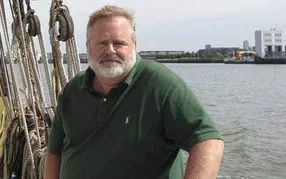
Robert J Entenman – 1957-2015
This summer marks the ten year anniversary of Robert Entenman’s death – a man who certainly changed my life. At the time of his funeral I wrote some words about Robert, which were written with public consumption in mind, but I’ve not written since about the personal impact he made on me.
I’d like to do that here (what follows is therefore personal and not therapy related).
I first met Robert just after the financial crisis in 2008. He joined my bank soon after me as my new boss, and we worked closely together until his untimely death in 2015.
At first, arrogant sod that I was, I resisted working for Robert. At the time I had an accidental direct reporting line to a ‘global head’ and, feeling I could manage that relationship well (and that the direct reporting line elevated me), I resented a new person arriving and things changing. Robert was a well-known, larger than life character in the City, and arrived without much notice. On being told I would report to him I had the ice-cold feeling of being sidelined – a sense of being demoted and devalued. This was nonsense as clearly there was nobody better to learn from. Between us we had a number of areas of special interest, but we both had a focus on electronic trading, experience of compliance related to sanctions (Iran/Russia etc), and many other things in Robert’s case.
He took my chippy attitude with patience and good grace, I can remember that. I wouldn’t have been so nice to a jumped up, grumpy, youngish know-it-all… Robert was professional and kind about it.
We eventually settled into a routine, and I stopped sulking. Early on, we travelled to Eastern Europe, I think Poland, for a day long meeting. I was the junior and Robert the ‘big beast’. The meeting, held in a drab, Eastern Bloc-style tenement building, ended with the usual expectation of polite thanks (it was customary to make a speech thanking everyone, before having a drink). One of our VIP hosts made closing remarks and asked whether “…this has been useful and worth the long trip?”. I braced for the standard niceties, but Robert, who had been quiet and bleary-eyed for the last hour, came alive. Dispensing with the niceties, Robert boomed at the room - he dissected the day forensically, pointing out the flaws in our hosts’ plans, their shaky (and cheeky) budget assumptions, and much more. It was brutal. I’d never seen anyone take this kind of approach in that kind of meeting.
Leaving behind some ashen faces and taking our car to a hotel, we had our own debrief where I have to say I got a fit of laughter. Replaying the exchanges together, especially as Robert was genuinely angry about what he felt was a wasted trip, was just too funny. And, of course, he was absolutely right. A royal waste of time for all concerned – but one that, without Robert, we’d all have pretended was useful. The laughter turned into drinks (lots of them) in the evening and we started to get to know each other properly. Robert was truthful and blunt, and always refreshing.
Over time I came to see that Robert was also a bag of contradictions – a mix of brilliance and insecurities. His career included important and unheralded service to his country, working within finance and had some real highs and very low points. He was charismatic and open at the same time as being fiercely private, like many with this background. He found love relatively late and had two wonderful children. I know from the odd comment he made – usually at the tail end of a lot of drinks – how much he loved his young kids, but this was rarely a topic of open conversation. I don’t recall him talking about wider family at any time.
A polymath, he had deep knowledge in many areas, and one of his great struggles was to explain complex things to people who might not have the intellectual horsepower to understand them. I’d watch him in hundreds of meetings trying to compress complexity into simple shapes for others, and admired the way he kept his natural tendency to temper (mostly) under control. Watching him fight himself and restrain the urge to start shouting was something I always found truly endearing. Only a few times did he really lose his temper in meetings. Usually he’d command the room, even with very senior leaders, then leave and sit next to me worrying for hours about the institutional politics.
It mattered to him a great deal that his own bosses understood and supported him, and I sensed his vulnerability to criticism if coming from above... He was private with this, even with me, but I sat next to him for years and saw it. On the one hand he would hold himself as though free from any reporting line. On the other, pleasing his bosses was so important.
Robert liked a drink, and was very skilled in that area… Important meetings were often held in pubs in the Moorgate area, rather than in the meeting rooms at the office. Although the drinking culture was nothing compared to even ten years before this time, this was still common enough in the city to pass without comment.
Several times a month there would be drinks, starting at lunch and going through the afternoon, and more often again in the evenings. Although The Globe and Wood Street were frequent places, our main meeting place was on the Barbican highwalk called The City Boot, which I think has now gone (at least the structure). It had a half-panelled wooden room with wrap around windows, right in the middle of the pub – the “conference room”. Very private, but with a full view of the rest of the pub, it could comfortably seat about twelve people, and a lot of meetings were held there. It’s a tradition I tried to keep alive from 2015 onwards, but the personnel had by then changed and the whole department diminished with a push to relocate our function to Italy. My heart wasn’t really in it after Robert’s death. But for a five year period from 2010 the City Boot was ours, and Robert would be found two or three days of the week sitting at the head of the table in the conference room, with a steady stream of beer arriving in tankards, surrounded by people coming and going.
Although it’s not actually that many years ago my memories are almost as though from a different time – a Dickensian picture, with warm lantern light on the wood on cold winters evenings, a full pub, suits and coats and scarves (hard for me to imagine that now!), of laughter, plenty of argument… of being at ease amongst friends with the drinks flowing. If I could, I’d go back and pinch myself – tell myself not to take it for granted and to really take it in. One time, after about a year of working closely with Robert, a good number of us were in the City Boot. A very large project had just come our way, and Roberts star was on the rise. He was to take over and lead a large combined department now combining the whole of I.T. as well as the Markets business side of things, and he was given permission to restructure everything.
Suddenly everything had changed, and although we had grown close (I had become his de facto number two) this was his chance to build things to his own taste. I was very young for the job I had, and didn’t have the experience of some of my colleagues. The budget was there to shunt me into some other role and hire whoever he liked, or take on half of Deloitte, Accenture, Mckinsey or any of them.
Anyway, on this evening I arrived a little later on to a full pub, and from the bar I could see Robert in conference with two senior Directors (who became close friends and who I miss – without work drawing people together many friendships fade after a while). It must have been a private chat, because it was rare for such a small number of people to be in the room. Seeing me through the glass, Robert waved at me to come in, which I did with some drinks. After a while, Robert eventually grabbed a pen and drew his vision for the new team structure of his expanded team. My name was right at the top as Senior Programme Director for the Markets division. I was shocked, and perhaps sensing my two colleagues (senior in experience and years - and who I didn’t know so well at the time) might question things, he announced with force that he didn’t want to hear a single thing about my name being there – now or later – and that I had truly earned my place at the table.
Whether or not that was so… what a vote of confidence. And a pivotal ‘sliding doors’ moment for me. I wouldn’t be doing what I do now had this not happened – chances are I’d still be working somewhere in the City.
I often thank Robert for this. Quite a few times, in small ways and from childhood, I’ve felt overlooked when it comes to getting a vote of confidence from authority figures (no complaints – I’ve won my share of these moments too), but this remains the single biggest example of personal backing that I have received.
There are many lessons to be learned from Robert’s life and from knowing him; the importance and beauty of being broadly knowledgeable, of taking an interest in different areas, of listening to people who know what they are talking about, of dedicating yourself to an objective and being bloody-minded about it, of having the guts to ‘call it as you see it’ – and much else. I thankfully had the opportunity to speak about these at the time he died. But there are also many lessons to be learned from his death.
Following some cardiac issues, Robert was booked in for heart surgery in early 2015. While serious, this was a planned operation and shouldn’t have been life threatening (over and above the risk associated with invasive surgery and being a larger sized person). It was a time of big internal politics at the bank, the beginning of a new policy to move important markets functions from London to Milan. This was something Robert felt passionately about, believing the intellect and manpower we needed were located in London. Politically, he was resisting these moves with everything he had – but it seemed at the time to be a losing battle (indeed it proved a losing battle for me in the years afterwards).
I remember chatting with him at our desks, with him clearly troubled. His booked surgery date clashed with an important meeting with a senior board member which had been put in the diary – someone, in Robert’s view, with the power to understand our point of view and reverse the planned change. Work wise, Robert saw this as a make or break moment. Red faced and worried, Robert told me one evening he was thinking of cancelling his surgery to attend this meeting. In short summary, I told him that would be crazy and not to do it, but Robert soon made up his mind and cancelled his operation.
The meeting went ahead after much struggle and effort to put together the right kind of presentations to make the argument for London. I’m sorry to say it didn’t work. If honest, it was never going to work, and it was calamitous that Robert felt his operation was secondary to the dog-and-pony show at the bank. However, I understood.
Robert’s operation was therefore rebooked for the end of June 2015, I believe on a Thursday, at London Bridge Hospital. Although not necessarily expecting any word on Friday, I felt sure Robert would pop up with a text or email from his recovery room. That never came, nor on Saturday. We’d obviously agreed he’d let me know when out and recovering.
What happened next is difficult to remember now, and I’d rather not consult my emails or records but just type freely. I believe I got a call from a family member of Robert’s from the States on Sunday, saying they could not reach him – it seemed the operation was something Robert had kept quiet. Either that or the other way round, I might have called the hospital, growing a bit concerned with the silence. Either way I know I did speak to the hospital late on Sunday, where I was told to come urgently the next morning.
I headed to London Bridge hospital first thing, and was taken to a room and informed by several consultants that Robert had sustained a catastrophic brain injury and was, in effect, brain dead. I remember asking how the hell this had happened, but the consultants seemed unsure also and tight lipped. They couldn’t and wouldn’t say. In some shock and anger, I then spent some time alone with him while on life support. I then recall speaking to his family in the states and Roberts wife, though I can only remember being there alone that morning. I remember there were decisions about life support made. That day and next few I can’t remember much else really.
I know I went to the bank at some point and had to inform everyone what was happening, then I was back at the hospital as other family began to fly over. It fell mostly to me to liaise with family and the bank to make arrangements, and to share news with friends, colleagues, vendors, many others in the City who Robert had personal and professional relationships with. It was a blur. The funeral was very well attended with a packed church and many City people outside in the grounds – an outpouring of respect for a remarkable man - and the service beautiful, but I can’t honestly say I remember much of it.
Short term, it was a very difficult time. However, it’s clear ten years on that I experienced the loss of Robert as an existential shock. His death marked my final day as an out-and-out investment banker, for sure. That whole ambition was done from that moment onwards, and although I had some successes and failures of my own after 2015 they are not things (either way) that have really stayed with me or made any deep impact. I became much more interested in other things. I think Robert would be right behind my choices.
At the inquest, the official cause of the brain injury was determined to be a blocked breathing tube that had not been spotted… This was reported on in the papers at the time. Robert’s death taught me a lesson I carry every day: no deadline, no meeting, no promotion is worth sacrificing your health or basic proximity with loved ones. But still so many of us (me included) play dangerously with that balance. Just as for Robert, it’s a hard balance to hold. He was a man who clearly loved his family, yet lived almost entirely for his craft. The demands of his career, and desire to provide for his kids, pulled him into a choice that cost him everything – cancelling a serious surgery to make a doomed pitch to a disinterested Italian whose name I have long since forgotten, and whose contribution and intellect was dwarfed by Roberts.
Every time I think of this part of my life, I’m reminded at least to try to relax with whatever concern is gripping me, to prioritize, to try to live fully in the moments that matter.
Like Robert, I try but also often fail at this, sometimes either my work or my worry seems important enough to dominate, and I don’t hold out hope I will ever really change… But Robert’s journey is a shining example of why we should try.
I miss Robert. I’d love to know what he would have to say about all the global tumult from 2016 onwards, his political-cultural analysis was always profound as he was better than anyone I have met at holding many complexities in mind.
More to the point though, I’d very much like to buy the old git one more beer.
---
Steve Perkins is a Consultant Psychotherapist and Clinical Supervisor in private practice in Shoreham-by-Sea and City of London. He is the author of Moral Singularity: Life Inside Closed Moral Worlds and Why Moral Conversation Breaks Down (2026), and writes on therapeutic enclosure, conviction cascades, the interpretive ratchet, and the structural dynamics of closed moral systems.
MBACP (Accred)
www.whitestonetherapy.com


Comments
Post a Comment