Adolescence... (10.4.25)
Adolescence... (10.4.25)
“A third of teachers reported misogyny among pupils last week, survey suggests”, says the headline of our national broadcaster, the BBC. According to a poll of 6,000 secondary school teachers, about 40% of the teachers who responded “…said they felt ill-equipped to handle such content”.
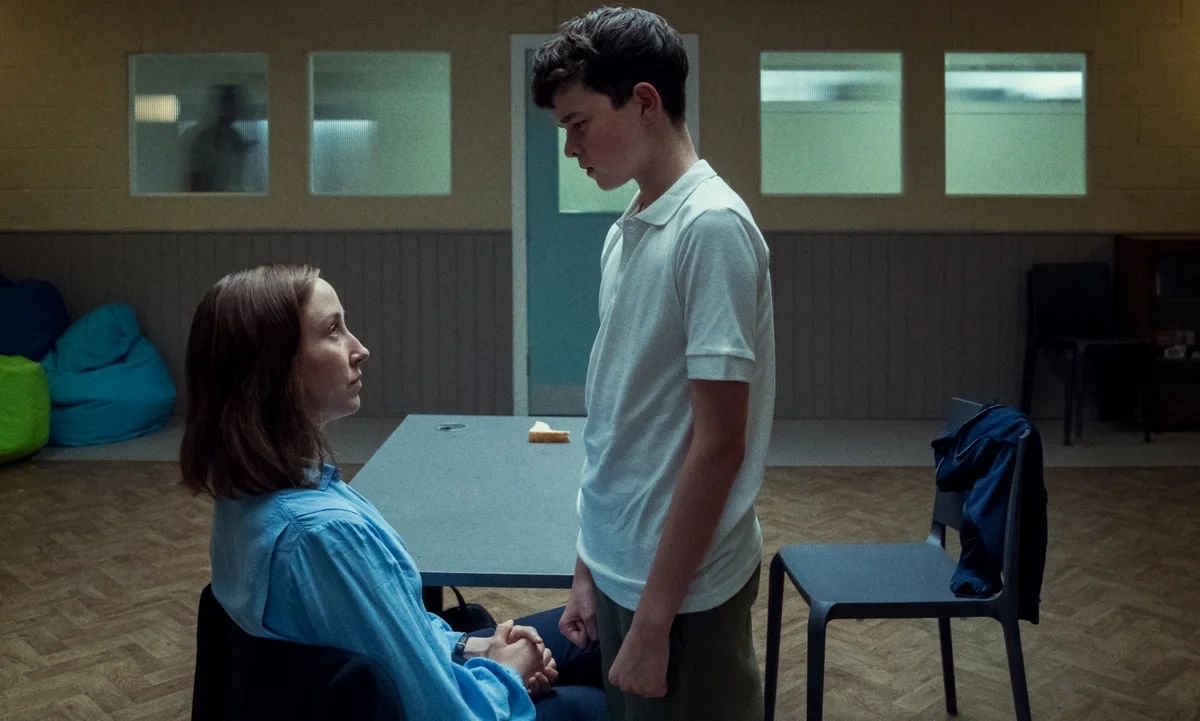
This comes hot on the heels of the impact made by Netflix drama “Adolescence”, the plot of which involves a young, white teenager whose mind has been overthrown by the ‘manosphere’ (prophets are varied, but first among equals is Andrew Tate). The thirteen-year-old protagonist has been socially isolated to the extent he has fallen under the spell of misogynists such as Tate, and brainwashed to the extent that he stabs a young girl to death (because that is the only logical conclusion of following the tweets of Tate).
Well, I watched the show. Adolescence misses the mark. Yes, its one-shot structure is brilliantly directed and Stephen Graham is a tour de force. It is beautiful TV. But while this is a very good depiction of a family’s grief and bewilderment at how their child has become capable of such a callous and evil act, it never explains HOW Jamie has been driven to kill or WHY he sees it as a rational act.
It is briefly mentioned that this is a killing driven by being mocked online by the girl who becomes his victim, but that thread is left hanging. Though hinted at,it never pushes as to what the influences have been to drive him there. We’re therefore left with the general impression that ‘there is something misogynistic and wrong within the culture of young, white males’.
I suspect the lack of details (the HOW/WHY?) is not left fuzzy to create poignant art and engage the viewer’s brain, but because the details supporting the broad assertion are very thin indeed - so this theme must be introduced as briefly as possible. But, basically, ‘Andrew Tate’. (ho-hum).
Adolescence has now reached knee-bending and Captain-Tom worship levels of social and political contagion in the UK. The importance that politicians and broadcasters are placing on this fictional drama is, I believe, misplaced. Worse, I feel it’s a kind of distraction or projection. We should actually be appalled that parliament can get worked up over a piece of Netflix fiction while refusing to hold an official inquiry into the industrial scale rape of vulnerable girls by grooming gangs. Just a couple of days ago, the Labour government cancelled even the small, local inquiries into the grooming gang scandal they had promised.
Perhaps this is another symptom of a country that has lost its way and is increasingly incapable of truthful reflection. I have the feeling that politicians and the liberal minded commentariat are actually angry about a problem largely caused by men pouring into the country in numbers so large they inevitably contain some threatening or violent people, often hailing from cultures with a lower regard for women, but they can't acknowledge this directly – it’s been their policy to admit huge numbers of people for 25 years or more, after all. So they channel their anger into an “acceptable” target. Depressing stuff.
I don’t believe most parents pause, if asked by their teenage daughters in the early evening if they can walk into town and buy a bubble-tea, and think: “Not sure, there might be a young, white, incel with a knife and a heart full of misogyny!”. I invite the reader to think for themselves where they would see the greatest theoretical risk to their theoretical daughters coming from. The statistics on knife crime in general are easy to find if you think data would help you on this (though successive governments work hard to obfuscate the details).
But if the debate is about the toxic influences young people are exposed to, then we have as much reason to worry about the classroom, in which children are taught gender ideology that sees young girls cutting off healthy body parts and wearing chest binders. We should be ever more concerned by toxic femininity, which prizes (suicidal) empathy over emotional resilience – short-term subjectivity over long-term objectivity. In any case, in the real world, the majority of boys who carry a knife do so because they believe others do, not because they are misogynist incels. The fear is of being stabbed themselves, not because they intend to attack teenage girls.
Anyway, the BBC wades into all of this from the starting position that misogyny is simply just an inherent feature of all young boys. They canvas the opinion of a headteacher of a large secondary school who shares this worldview, asking him to articulate the issues and outline his approach. Headmaster Sukhjot Dhami talks about the problems faced by young British adolescent males, which I would hope he has thought through well, tasked (as he is) with playing a key role in shaping young boys into healthy, well-integrated adults of tomorrow.
Dhami starts by acknowledging the misogyny in all his young charges, observing that misogynistic views in schools "have always been there". As well as sending a helpful email to all parents about emojis “used by incels, or involuntary celibates” – a type of misogynistic online culture (BBC definition – not much curiosity there about the phenomena) – he is “extremely worried” about the access young people have to spaces online “where hate is normalised”. Various steps have been taken in his school to ‘gather data’ in classrooms to identify and rectify any and all signs of sexist behaviour (by which I think he really means misogyny), and the safeguarding team will then ‘intervene’.
It may help to see Mr Dhami. In the real world, when it comes to power, someone’s policy can’t be divorced from their person. So here’s the headteacher of a large school, working hard to root out the misogyny in young boys and recording it for safeguarding reasons. As the chief male role model of the school - the embodiment of masculine potential - the buck stops with him in helping young boys understand and live up to the ideals of being a healthy, integrated young man. Here he is.
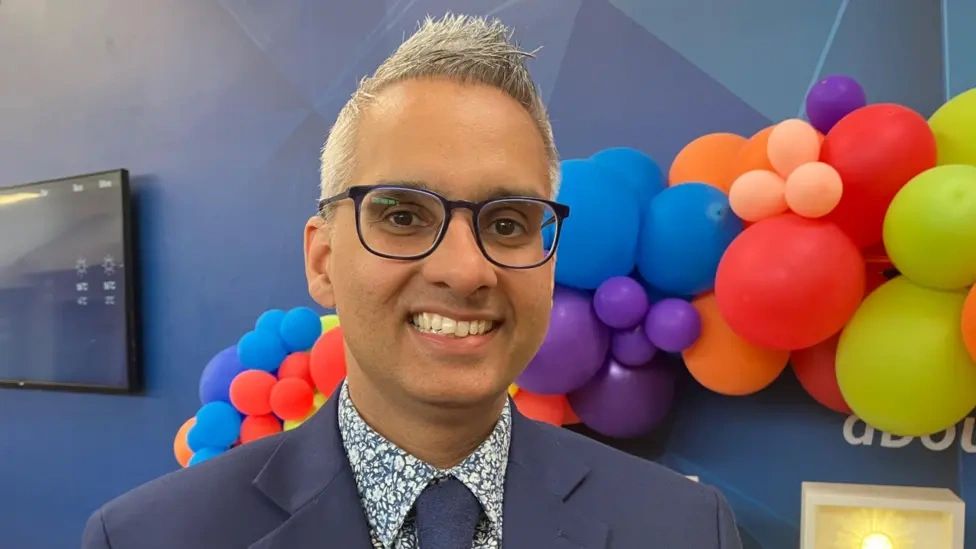
Hmmmmm……. (pic credit: BBC).
I must be honest with you, dear reader, this headteacher doesn’t strike me on first appearances as a wonderful example of a target for young men.
I don’t say this to be cruel to Dhami, who I am sure means well (but is an irrelevant example of type). I say it because it’s a serious cultural problem – the failure to symbolize in awareness the masculine ‘rite of passage’ from adolescence to adulthood. Magician shirts, thick rimmed glasses, hairless face and jolly colourful balloons do not satisfy the adolescent male need (biological and psychological) to learn how to harness their newfound strength and power from a ‘good example’.
I grow worried about the experience of young boys and men. Let me make the case here.
It’s difficult to exaggerate the undercurrent of antagonism toward boys permeating modern culture. This isn’t primarily about blatant anti-male bias - though such instances do occur - but rather a broader sense of disapproval toward masculine qualities and a striking disregard for the passions, prospects, and emotional worlds of young boys. In spaces where children gather, such as schools, after-school clubs etc, the behavioural guidelines, norms, and expectations tend to reflect traditionally feminine values, prioritizing the preferences and sensitivities of girls and women.
This plays out in several distinct ways, starting with how the drive and ambition of young boys are either overlooked as unremarkable or outright condemned as symptoms of overbearing male privilege and entitlement. Society often urges men to “step back” and “create space” for women, while young girls are cheered on to “step up” and “seize the reins.” When a boy voices his aspirations, it’s brushed off with a lukewarm “that’s nice, Tommy,” whereas a girl’s ambitions spark enthusiastic support—“Lila, that’s incredible, don’t let anything hold you back!”
In the school system’s culture, there’s a persistent tendency to view any style of play or learning that captivates boys as somehow problematic. Chances are the kid will eventually be plonked before a therapist like me with a confused expression and an ADHD diagnosis. A lively 10-year-old, for instance, is expected to stay seated and calm in a classroom for six to eight hours daily, with almost no outlet for competition or physical energy beyond a sporadic P.E. class and a fleeting 15-minute break. Anyone who knows children understands that young boys aren’t wired to excel in a “stay still and focus for hours” competition against girls. Almost every structured activity he’s part of – summer camps, clubs, extracurriculars—is led by women. Most authority figures in his world, aside from the odd male (perhaps Mr Dhami with the balloons?!), are female. Yet, the prevailing cultural narrative he absorbs insists that women are downtrodden, while men hold all the power and coast through life effortlessly.
At the same time, the broader culture bombards young boys with the idea that they’re basking in boundless male privilege, while simultaneously confining them to female-oriented settings that prioritize girls’ preferences and are overwhelmingly managed by women.
Picture a reality where every authority figure you encounter is female: your babysitter, nursery staff, primary teachers, secondary teachers, head teacher, nurses, and the majority of staff in most social settings are all women, and you’re raised by a single mother. The heroes in the films and TV shows you watch are women, with “girl power” woven into most of the entertainment aimed at you. Your dad’s barely around, every TV father is portrayed as a bumbling fool, and strong male role models are scarce (many being demonised). School seems designed for the girls, who outshine you academically and are more likely to head to university at the end of it all. The way people communicate, the social rules, and the expectations all feel tailored to feminine styles. You’re repeatedly told that masculinity is a problem, urged to mimic how girls behave, speak, and connect with each other. At the same time, the wider culture labels your instinct to race around and play rough as a disorder to be corrected, pushing you to emulate girls while insisting you’re coasting through life with vast privileges handed to you by something called “the patriarchy,” which supposedly stacks everything in boys’ favour. The society he’s told exists bears no resemblance to the world any 10-year-old boy actually knows.
Can you fathom how baffling this must feel to a typical 10-year-old boy whose biggest desires are to play Playstation for a bit, kick a ball around, hang out with a mate, give his brother a dead leg for stealing his crisps, and run about in the garden? How is a child that age supposed to untangle this confusing mess? I’m a grown adult with a decent education and at least a basic grasp of the reasons and ideologies behind these trends, so I can piece it together. But young boys know nothing about all that. They spend their day in social and cultural spaces shaped by women, where the traits girls tend to excel at are celebrated, all while being told on the one hand that boys have life handed to them on a silver platter, and on the other that they are potential knife-wielding killers (who must sit down and watch Adolescence at once). To them, the messages from the culture around them and the adults in charge sound downright schizophrenic.
There is a striking obliviousness to what goes on inside a 10-year-old boy’s head. From what I can see, the female-slanted design of the places kids spend their time has left the people running things without any real insight into how boys think or feel, leaving boys struggling to find their footing in the social landscape. It seems like the school system views boys as broken versions of girls, leaving it nearly impossible for them to feel truly seen or heard – rather they are contained and ‘corrected’ as a potential source of threat. One of the most insidious effects of identity politics has been an intense focus on uplifting women and girls, while making stern corrective noises to the boys, to the extent that boys are slipping through the cracks—and hardly anyone in our societal structures seems to notice or care much.
Over the years I’ve heard young teenage boys in the therapy room fumbling to explain parts of all this, why this world feels so hard to manoeuvre, and it’s no wonder— they’re stuck spending hours each day trying to follow rules that, to them, sound completely random and nonsensical.
Once more, existing as a boy in 2025 has to feel downright confusing.
I only rarely meet women who, in private conversation, actually believe that all boys are misogynists ‘out of the box’, or even that most men are misogynistic. For example, this simplistic way of seeing men doesn’t survive contact very often for women who actually have male children. Even those with truly tough circumstances have a good impression of at least one man in their lives. Most have at least a decent brother, a father that is cherished, a network of friends from school, university or career that includes at least one valued man. But we seem to suspend this body of knowledge when thinking about “men” the category, and setting an institutional stance towards them. I have encountered and heard examples of this worldview many times in the stultifying and suffocating parodies of ‘empathy’ or ‘pastoral care’ that are generated by some institutions (such as in schools) and H.R. departments. It’s like our institutions themselves have been captured by this coddling and smothering form of empathy. They must be claimed back.
In his book “To Own a Dragon”, Donald Miller discusses a documentary about a group of orphaned elephants that had been rescued and taken to a nature reserve. The girl elephants adjusted quite fine, but the boy elephants created a great deal of chaos and engaged in highly destructive behaviour. The boy elephants would attack the local rhinoceroses at the watering hole, and when the boy elephants would come across each other, the result was usually that they engaged in violent fights with each other. These young male elephants had become adolescents and did not know how to control their newfound energy, and they had no idea what they were supposed to do with all their size and muscle.
When male elephants become adolescents, they go through what is called a musth cycle, which is marked by a green liquid secreted that rolls down the hind leg. Typically, when the first musth cycle begins the young elephant goes out in search of a mentor, an older male elephant to serve as a guide; and the scent of the liquid on their leg alerts an older male elephant to the fact that the younger boy elephant has reached adolescence and needs a mentor. When a mentor is found, the musth cycle ends. At that point, “the older and younger begin to travel together, find food together, to protect each other, - the older one teaching the younger one what its strength is for, and how to use it to benefit the whole elephant tribe.” In the absence of an older male elephant to teach them how to use their strength, work together, and get along, the younger elephants had grown incredibly powerful and aggressive without any idea how to properly channel that strength for the benefit of their elephant tribe. The result was a large number of aggressive male elephants running roughshod over the nature reserve, harming each other and the other animals.
Boys are like that.
They need strong male mentors to teach them the ropes of being a man, so they learn how to put their strength and energy into something good. Boys who are falling behind in a world that makes no sense to them are going to look for a guide, and if they can’t find it at home, they’re going to look elsewhere. Boys are not going to seek out those whose rallying cry is “The Future is Female.” or who arrive in the costume of a birthday magician for toddlers with some colourful balloons. If they cannot find good male figures some of them are going to fall under the spell of pathological male influences. Some will join street gangs, some will become bullies, and some will fall under the spell of immoral online influencers selling them a caricature of masculinity. Many more will just become depressed and confused.
Importantly, boys need to see credible mentor options in the institutions that play a part in shaping them. Boys want a stable, competent, stronger version of themselves to show them what they can be, and they will look for another male father-figure to come alongside them and tell them what to do with all their newfound energy and strength. This means men are going to seek out mentors and if they can’t find good ones they will find bad ones, but they are going to look for someone.
Our society is faced with a choice: we can give boys good mentors to teach them how to be strong and good, or they will find bad mentors who might teach them to be aggressive and immoral. The choice is not between coddled, feminized ‘empathy’ – the sort that seeks to police every thought, word and deed - Vs “toxic masculinity,” the choice is between Jordan Peterson and Andrew Tate.
---
Steve Perkins is a Consultant Psychotherapist and Clinical Supervisor in private practice in Shoreham-by-Sea and City of London. He is the author of Moral Singularity: Life Inside Closed Moral Worlds and Why Moral Conversation Breaks Down (2026), and writes on therapeutic enclosure, conviction cascades, the interpretive ratchet, and the structural dynamics of closed moral systems.
MBACP (Accred)
www.whitestonetherapy.com


Comments
Post a Comment